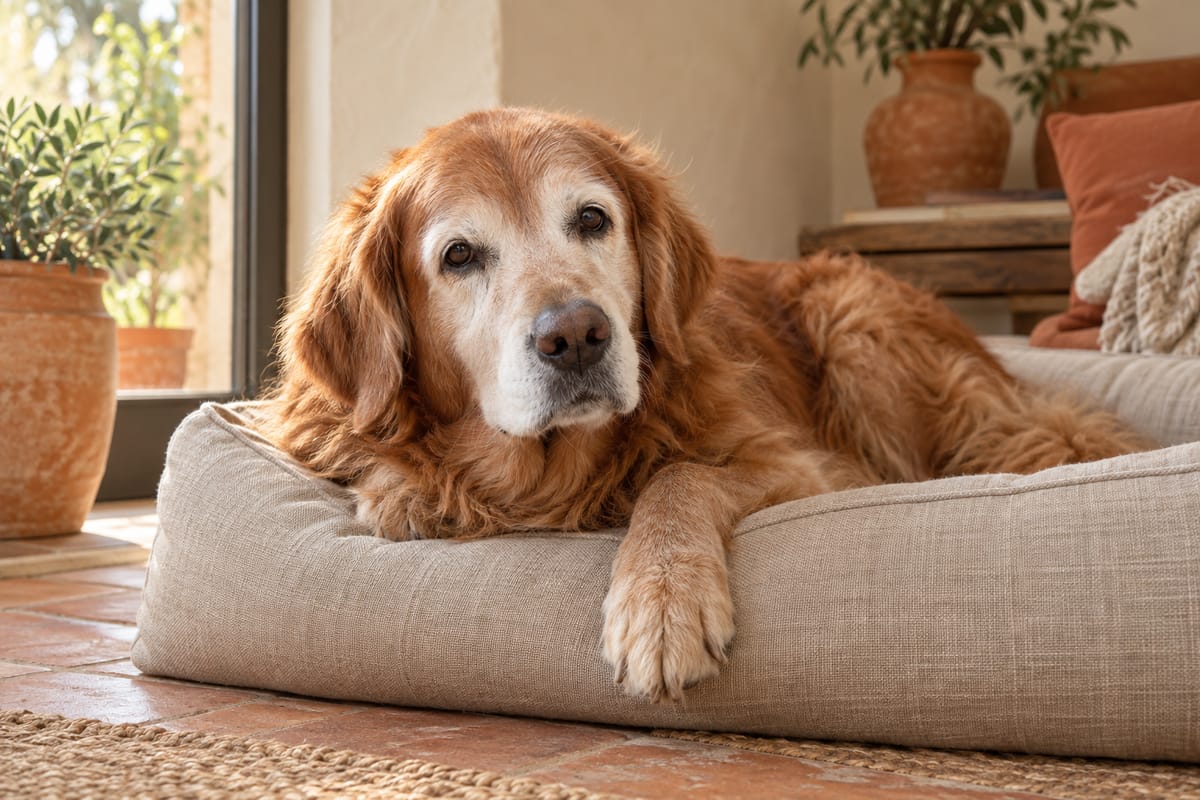
Senior Pet Portraits: Capturing Your Furry Friend's Wisdom
A warm guide to senior pet portraits—why now is the perfect time, how to make sessions stress-free, and ways to honor the quiet wisdom in your aging friend's eyes.
Senior pet portraits are about honoring a lifetime of trust, not chasing perfection. With soft light, eye-level angles, and short, comfortable sessions, you can capture the quiet wisdom in your pet's face and keep it close for years to come.
There is a particular kind of beauty that arrives with a gray muzzle and slow, careful steps. It shows up in the way a senior dog rests their head on your knee, or the way an older cat blinks at you from a sunbeam. Senior pet portraits are not about hiding age. They are about honoring a life shared—and capturing the quiet wisdom that only time can write into a familiar face.
Why the Timing Matters More Than You Think
We often assume there will be another good day to take photos. But aging can move quickly, and a pet who seems fine today may feel different next month. If you have been thinking about a portrait, let this be your nudge. You do not need a perfect day or a professional camera. You need a quiet hour, your pet's favorite blanket, and a willingness to meet them exactly where they are. Waiting for a milestone can mean missing the window. The best time for a senior portrait is now—not because you are saying goodbye, but because you are saying I see you, today, just as you are.
Senior-Specific Photo Tips That Honor Their Beauty
Senior pets have special needs, but they also have special beauty. These tips will help you work with age instead of against it.
- Gray muzzles and white fur glow in soft, diffused light. Place your pet near a window or sit in open shade. Harsh sunlight can blow out white fur and make gray muzzles look harsh.
- Cloudy eyes are not a flaw. Keep the light in front and slightly above so their eyes catch a gentle catchlight. Avoid flash—it can startle them and create a glassy look.
- Shoot at eye level. Kneel, sit, or lie down so the camera matches their height. This simple shift makes every portrait feel more intimate and respectful.
- Let them choose their pose. Many senior pets can no longer sit or stand on cue. If your dog wants to lie down, photograph them lying down. If your cat curls into a ball, let the ball be the portrait.
- Use treats for tiny chin lifts, not full poses. A soft wait and a small reward can encourage them to lift their gaze without pressure.
- Move slowly and take breaks. A five-minute session with rest is better than twenty minutes of stress. Watch for stiff joints and signs of fatigue.
Above all, let your pet set the pace. If they are more interested in sniffing than posing, take a few candid shots and pause. The goal is not to collect dozens of perfect images. It is to leave the session with one or two frames that feel like them—quiet, a little slower, and full of history.
Comfort First: Building a Session Around Their Needs
Before you think about composition or style, think about your pet's body. Older pets often have arthritis, hearing loss, or vision changes. Place a soft rug or their favorite bed where you plan to photograph. Keep the room comfortably warm, because senior pets get cold easily. Avoid sudden movements and loud camera sounds. If your pet seems anxious or sore, stop and try again later. A portrait should never cost your companion a peaceful afternoon.
Celebrating a Life Shared, Not a Life Ending
It is natural to feel a little sad when you look at photos of an aging pet. But senior portraits don't have to be somber. In fact, the best ones often feel warm and full of everyday love. Include the objects that tell your story—a worn leash, a favorite blanket, a bowl with chipped paint. These details are not props. They are proof of a life spent together. The image becomes a celebration of all the mornings you've shared, not a memorial for the ones ahead.
Choosing a Gentle Style for Their Age
There are many ways to photograph a senior pet, but gentle styles tend to suit them best. Think soft, natural light, muted backgrounds, and close-up frames that highlight their eyes, ears, and gray muzzle. You can explore gentle portrait styles at petmona.app/generate and see how a simple AI portrait can turn an everyday photo into something timeless. You can also choose a classic black-and-white or warm-toned edit. Avoid heavy retouching that erases the very features you want to remember—those white whiskers, those wise eyes, that slightly crooked ear.
Print and Framed Keepsakes Worth Touching
A photo that lives only on your phone will eventually be buried in an album or lost in a backup. Printing a senior portrait gives it a place in your daily life—on a shelf, a mantel, or a wall where you can see it every morning. You can order a framed print at petmona.app/framed-print to keep your favorite image close. A framed print is more than decoration. It is a quiet way to say that this animal mattered, and that their face will still be part of home long after they are gone.
A Portrait Is a Promise
Senior pets teach us to slow down. They show us that a comfortable silence is its own kind of conversation, and that love doesn't need to be loud. When you take their portrait, you are not capturing an ending. You are capturing the depth of a bond that has been shaped by years of trust. So pick a good light, sit beside them, and let the camera see what you see—a friend who is older, wiser, and still absolutely full of love.
PetMona turns a clear pet photo into wall-ready art — ship an 8×10″ print or unlock HD to gift yourself. Free preview, no subscription.
Frequently asked questions
When is the best time to take senior pet portraits?
Today, not someday. Senior pets can change quickly, and waiting for a good day may mean missing the window. If your pet is comfortable, pick a calm morning or afternoon, keep the session short, and let them set the pace.
How do I photograph a pet with cloudy eyes or gray fur?
Use soft, diffused light from the side or a window to reduce glare and bring out warmth. Focus on their eyes and expressive face, and don't over-edit—cloudy eyes and gray muzzles are badges of a life well lived.
What if my pet can't sit or lie down comfortably anymore?
Let them choose their position, even if it's just resting in your lap or on their bed. Shoot at their level, use treats for gentle chin lifts, and skip any pose that causes pain. A portrait is still beautiful when it honors how they are today.