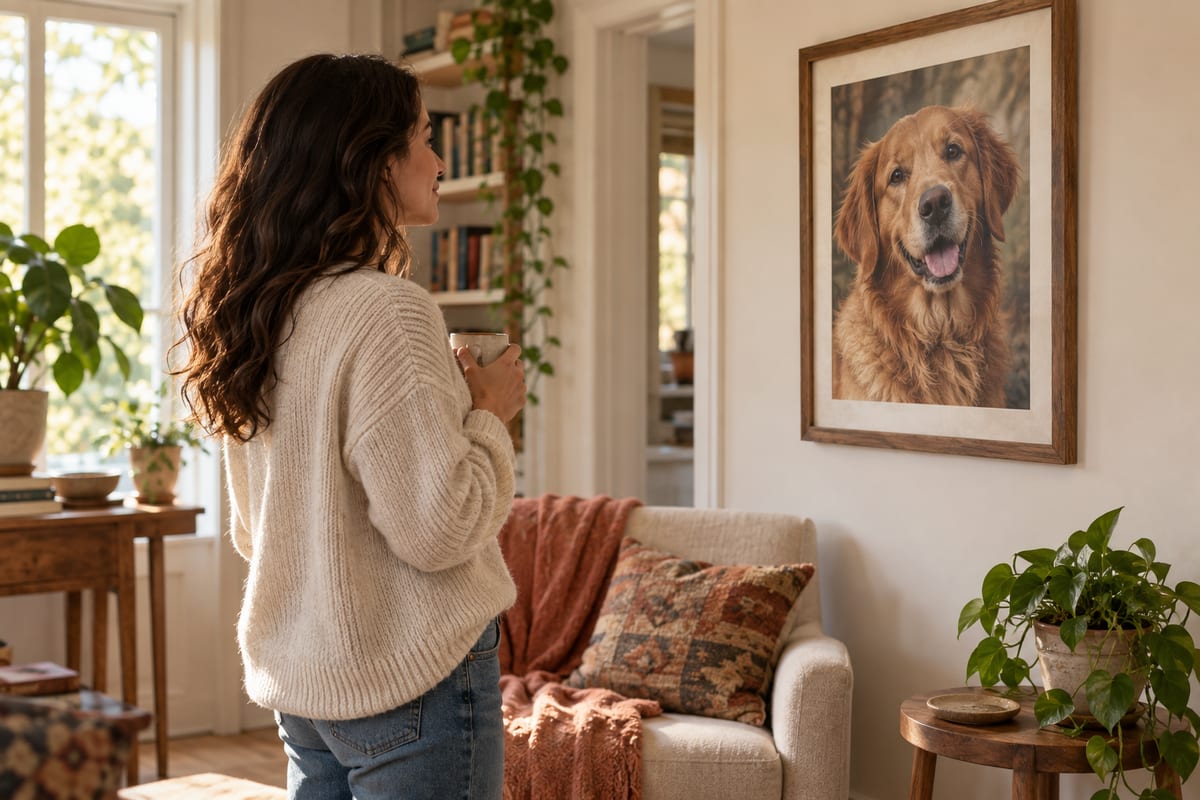
The Psychology of Pet Portraits: Why We Love Framing Our Pets
A framed pet portrait is more than a photo on a wall. It is a symbol of family, memory, and enduring love.
A framed pet portrait transforms a disposable image into a deliberate symbol of love, identity, and memory. We hang our pets on walls because they are family and because a single chosen image carries more emotional weight than thousands of unseen photos.
Every year, our camera rolls fill with pictures of our pets. There are sleepy morning photos, blurry action shots, and ten near-identical images of the same tilted head. Most of these will never be seen again. Yet many of us set aside one or two and put them in frames. That choice is not casual. Framing a pet portrait is an emotional act, one that says more about how we love than we often realize.
Pets Are Family, and Family Belongs on the Wall
For most pet owners, a dog or cat is not simply an animal that lives in the house. They are a family member with a name, a personality, and a place at the dinner table. They celebrate our good days, sit with us on hard ones, and shape the rhythm of every morning and evening. Framing their portrait is a natural extension of that bond. We hang photos of the people we love, and for many of us, our pets are exactly that.
There is also something quietly profound about placing a pet alongside human family photos. It is a public statement, to ourselves and to guests, that this life matters. The frame does not just hold a picture; it holds a relationship.
The Home as a Mirror
The objects we choose to display in our homes are rarely neutral. They communicate what we value, who we love, and how we want to feel when we walk through the door. A framed pet portrait becomes part of that language. It signals that the bond with an animal is woven into our everyday environment, not hidden in a phone.
- Pets are part of our daily routines, so their image fits naturally among our keepsakes.
- A portrait says that the pet has a permanent place in our lives, not just in our hearts.
- The style of the portrait also reflects personal taste, whether realistic, whimsical, modern, or classic.
The Power of One Chosen Image
A camera roll can hold thousands of photos, but quantity often dilutes meaning. The more images we collect, the less time we spend looking at any single one. A frame changes that. It asks us to choose. Out of all the moments captured, this one deserves to be seen every day. The act of selecting a photo and placing it on the wall transforms it from a passing record into a lasting symbol.
This is why a framed portrait feels different from a photo on a screen. A phone is a portal to everything; a frame is a doorway to one thing. It invites us to pause, remember, and reconnect with a feeling. If you want to create that kind of image for your own home, the generation tool at petmona.app/generate makes it easy to explore different artistic styles.
Memory, Continuity, and Attachment
Pets mark time in a way few other relationships do. We bring them home during one season of life and watch them age beside us. A framed portrait freezes a moment of that shared story. It helps us keep a mental timeline of our lives: the apartment where we adopted them, the years they slept on our feet, the morning routines that grew around their needs.
For some people, seeing a pet's face on the wall can bring a small moment of comfort during a stressful day. Others may simply value the portrait as a record of daily life together. The response is personal, so it is better to treat a portrait as a meaningful object than as a promise of emotional benefit.
Grief and Loss
Some people frame a pet partly because they want a visible memory for the future. After a loss, that image may feel comforting at one moment and difficult at another. A portrait can honor a continuing bond, but there is no single right time or way to display it.
Many people find comfort in speaking to a portrait, or simply sitting with it during quiet moments. The image becomes a touchstone for the love they shared. When grief feels formless, a framed picture offers a concrete anchor.
Why Pet Portraits Make Meaningful Gifts
A framed pet portrait is also one of the most personal gifts you can give. A new pet parent, a friend who just lost a long-time companion, or a family celebrating a pet's adoption all have one thing in common: they carry a deep emotional connection to an animal. Giving them a portrait shows that you see that connection and that you consider it worthy of celebration.
A gift like this says, I know what this pet means to you. PetMona is built for these moments, and the framed print option at petmona.app/framed-print turns a favorite photo into a gift-ready keepsake. It is a way of participating in someone else's bond, and it often becomes a treasure they keep for years.
At its heart, framing a pet portrait is a small act of love. It says that this animal mattered, that this story deserves to be remembered, and that the bond between human and pet is real enough to hang on a wall.
PetMona turns a clear pet photo into wall-ready art — ship an 8×10″ print or unlock HD to gift yourself. Free preview, no subscription.
Frequently asked questions
Why do pet portraits feel so emotionally powerful?
Pet portraits make an invisible bond visible. Unlike a phone photo that disappears into a camera roll, a framed portrait is a deliberate reminder of the love, routine, and shared history we have with our pets.
Can a framed pet portrait help with grief after losing a pet?
It can for some people. A physical image may feel comforting or help preserve a memory, while others may prefer not to display one right away. A portrait is a personal keepsake, not a treatment for grief.
What makes a good pet portrait for framing?
A good pet portrait captures something true to the pet's personality. Choose a photo with clear lighting and a familiar expression, then work with an artistic style that fits your home and honors the animal's character.