How to Train a Dog to Come When Called (Reliable Recall)
Reliable recall isn't magic — it's a habit built with high-value rewards and short, frequent sessions. Here's how to get it.
To teach recall, reward your dog every time they come to you inside a low-distraction room, using a treat they only ever get for this. Call with one clear cue, back away a few steps, and praise the instant they arrive. Never call them to something unpleasant, and keep sessions to a few minutes. Most dogs respond reliably within two to three weeks.
Coming when called — recall — is the single command that can literally save a dog's life, yet it's also the one people say their dog 'doesn't do'. That's almost never because the dog is stubborn. It's usually because recall got trained with a word the dog associates with ending fun, or because it was practiced only in a quiet room with no real payoff.
Why your dog ignores 'come'
Most dogs hear 'come' a hundred times a day, and most of those times nothing good happens. When 'come' means the walk is ending, the harness is going on, or a scolding is coming, the dog learns to treat the word as a warning rather than a cue. Recall only sticks when coming to you reliably pays off better than whatever the dog was about to do.
The three-step foundation
- Start with zero competition: a small room, no toys, no other pets, no open door.
- Use a once-in-a-while treat (tiny bits of cheese or chicken are fine) that your dog only gets for recalls.
- Keep every recall session under five minutes and always finish on a success.
A simple two-week plan
- Days 1–3: practise in one quiet room, ten recalls a session, a treat every time.
- Days 4–7: add another room and a little distance, then call from behind a doorway.
- Week two: move to a fenced garden and add mild distractions, rewarding every successful return.
Safety first off-lead
Until recall is reliable, practise in a fenced space or on a long line, and never call your dog away from something dangerous without a plan to reward them. A recall that has been rewarded a hundred times is worth far more than one tested too early.
Keep the happy moment
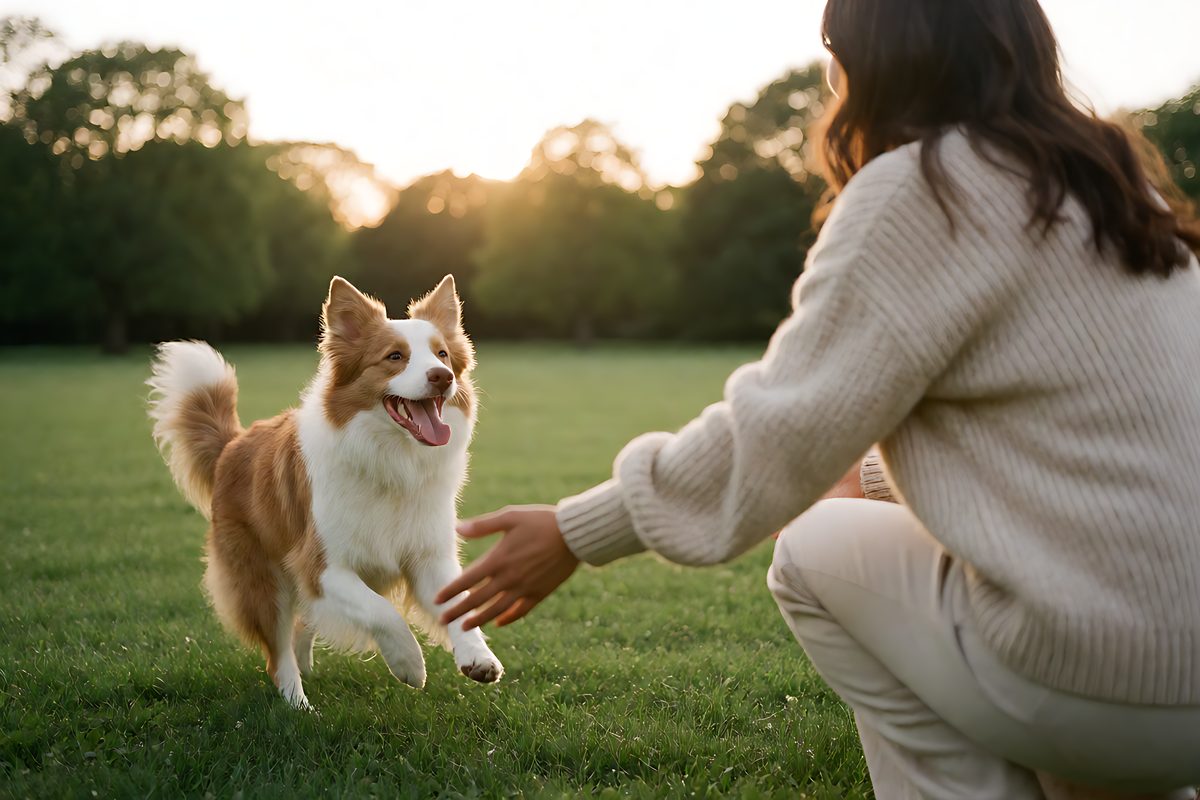
The best photo of your dog is often the one right after a successful recall: relaxed, bright-eyed and looking straight at you. Take it in natural light at their eye level, then see it as a portrait with a free preview at petmona.app/generate.
What actually breaks recall
- Calling the dog to punish them, or to do something they dislike.
- Chasing a dog who won't come — the chase makes it a game.
- Practising only at home, then expecting it to work off-lead at the park on day one.
PetMona turns a clear pet photo into wall-ready art — ship an 8×10″ print or unlock HD to gift yourself. Free preview, no subscription.
A five-session recall routine
- Remove distractions. Pick a quiet room with no toys, no other pets, and the door closed. Stand a few steps from your dog.
- Cue and back away. Say your recall cue once in a happy tone, then take a couple of steps backward so coming to you feels like a small chase.
- Reward instantly. The moment your dog reaches you, deliver the high-value treat and an enthusiastic 'yes'. No delay, no extra commands.
- End on a win. Do three to five recalls, then stop while your dog still wants more. Always finish on a success so the last memory is a reward.
- Take it outside. Move to a fenced yard, then a quiet park, adding distance and distractions gradually. Keep using the same premium treat at first.
Frequently asked questions
Is it too late to train an older dog to come when called?
No. Dogs of any age learn recall; it just takes consistency. Older dogs may settle into the routine faster than a young, easily distracted puppy. Use the same high-reward, low-distraction approach and give it a few weeks.
Why does my dog come when I have a treat but not when I'm empty-handed?
Your dog is telling you the treat is currently the entire reason to come. Once recall is rock-solid, start rewarding randomly and often — one repeat in three. Never stop rewarding recall entirely; keep paying the 'come' contract so it stays worth a dog's while.
What should I do when my dog deliberately runs the other way?
Do not chase and do not punish. Chase makes it a game and punishment teaches the dog that coming to you is dangerous. Stay calm, do a quick happy recall cue, and if they ignore it, just move closer and try again from a shorter distance.
How long does recall training take?
Most dogs improve noticeably within two to three weeks of short daily sessions at home. The truly trustworthy off-lead recall you'd want near a road takes longer, so keep practising at increasing distance and distraction before trusting it somewhere risky.
What's the best treat to use for recall training?
Use small, soft, high-value bits your dog rarely gets otherwise — bits of cooked chicken, cheese, or a commercial training treat. The key is that it outranks whatever else is around, so keep it special and reserve it for recall. Tiny portions let you do more reps without overfeeding.