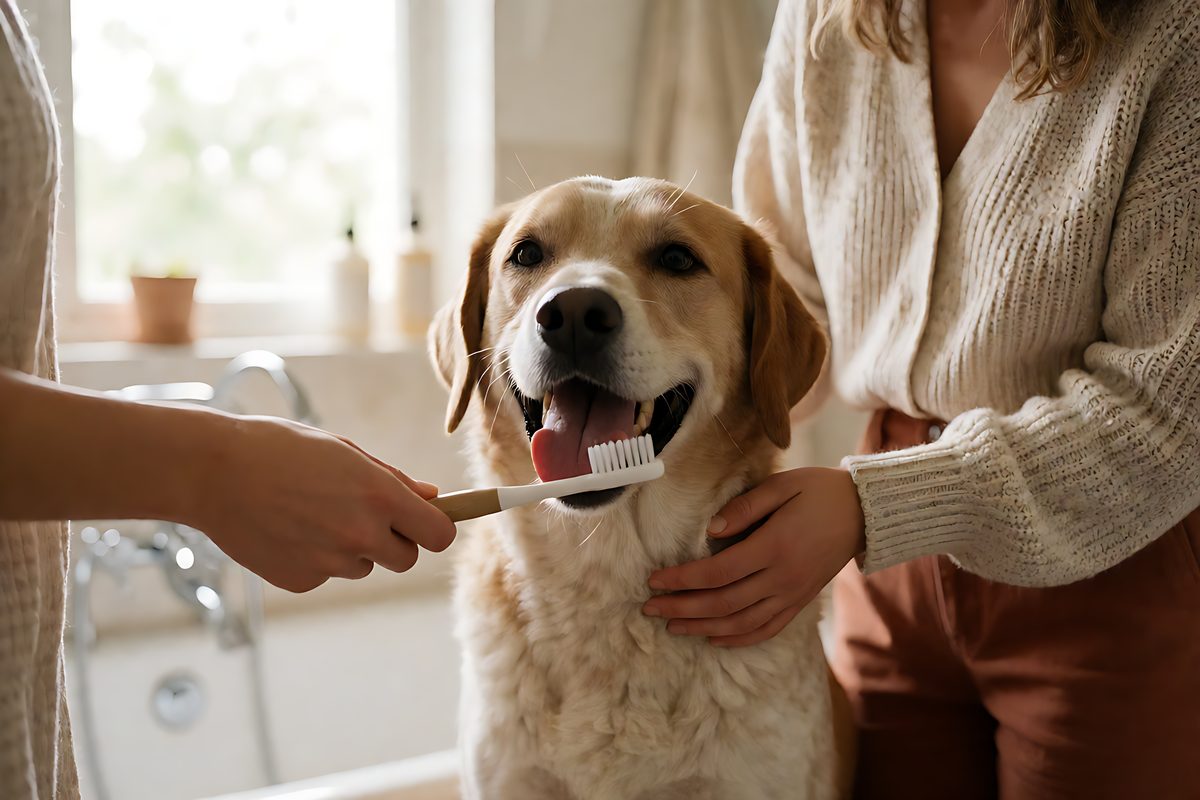
How to Brush a Dog's Teeth (and Get Them to Accept It)
A two-minute routine a few times a week genuinely helps. Here's how to make your dog tolerate — maybe even enjoy — tooth brushing.
Brush your dog's teeth two to three times a week with dog-specific toothpaste — never human toothpaste. Start by letting them lick a pea-sized blob, then use a finger brush or soft dog toothbrush on one tooth at a time, angling toward the gumline. Go slow, praise constantly, and build up. If your dog won't tolerate it, ask your vet about dental chews and a professional clean.
Dental disease is one of the most common dog health problems, and also one of the most preventable — yet it's the habit most owners skip. The good news is that a short, twice-weekly routine makes a real difference, and most dogs accept it far more easily than people expect once you start with the toothpaste rather than the brush. If your dog already has bad breath or brown teeth, start with a vet check, then begin brushing.
Start with toothpaste, not a brush
The single biggest mistake is going straight in with a brush. Instead, put a pea-sized blob of dog-specific toothpaste on your finger, let your dog lick it, and repeat that for a few days. Dog toothpaste is flavoured to be palatable and is safe to swallow; human toothpaste is the exact opposite — many brands contain xylitol and fluoride that are toxic to dogs, so never use it.
The actual brushing technique
Once your dog is happy licking the toothpaste, move to a finger brush, then a soft dog toothbrush. Angle the bristles toward the gumline — that's where plaque builds — and brush one tooth or a small section at a time rather than trying to do the whole mouth at once. Go slowly, keep everything relaxed, and praise the entire time. You're aiming for a couple of minutes on the outer surfaces, which is where most of the visible tartar forms.
How often, and when to see the vet
- Aim for two to three times a week, ideally daily — consistency beats intensity.
- Always use dog-specific toothpaste; never human toothpaste or baking soda.
- If your dog's breath is persistently bad or their teeth are brown or bleeding, book a vet check — that is a dental-disease sign, not just 'dog breath'.
- Dental chews and water additives help, but they don't replace brushing — think of them as a top-up, not a substitute.
Turn it into a two-minute ritual
- Pick the same time each day, such as after the evening walk.
- Keep the toothpaste and brush in the same spot so the cue is predictable.
- End every session with praise or a favourite game, so your dog looks forward to the next one.
A relaxed dog is a photo-ready dog
After a calm, praised routine, a dog is relaxed and bright-eyed, which is exactly what a portrait photo needs. Take one in natural light at their eye level and see it as a portrait with a free preview at petmona.app/generate.
This is general guidance, not veterinary advice. If your dog already has significant tartar, bleeding gums, or loose teeth, get a professional check before starting a home routine — brushing over intense inflammation can hurt. A vet can tell you whether your dog needs a professional clean and the best home-care plan.
PetMona turns a clear pet photo into wall-ready art — ship an 8×10″ print or unlock HD to gift yourself. Free preview, no subscription.
Build up to a comfortable brushing routine
- Pick a dog-safe toothpaste. Buy enzymatic toothpaste made for dogs — flavoured, safe to swallow, never the human kind.
- Let them taste it. Put a pea-sized blob on your finger and let your dog lick it. Repeat for a few days until they're happy to see it.
- Introduce a finger brush. Dip the finger brush in toothpaste and gently rub it along the outer gumline. Keep it short and reward heavily.
- Brush one tooth at a time. Switch to a soft dog toothbrush, angle toward the gumline, and do a few teeth per session. Stop while your dog is still comfortable.
- Build a routine. Work up to two to three minutes on the outer surfaces, two to three times a week, in a calm, predictable place.
- Ask your vet if they won't accept it. If your dog resists hard, has bleeding gums, or you're unsure, ask your vet about dental chews and a professional clean.
Frequently asked questions
Can I use human toothpaste on my dog?
No. Many human toothpastes contain xylitol, which is highly toxic to dogs (even in small amounts can cause a dangerous drop in blood sugar), and fluoride can also cause problems. Always use a toothpaste specifically made for dogs, which is flavoured to be palatable and formulated to be swallowed safely.
Do I really need to brush if I give dental chews?
Dental chews and water additives genuinely help reduce plaque, but they don't reach the gumline the way a brush does, and they don't remove tartar already hardened. Think of chews as valuable support, not a replacement. Brushing a few times a week plus chews is the combination that actually protects teeth.
What if my dog's teeth are already brown and their breath is bad?
Brownish teeth and persistent bad breath are usually signs of existing dental disease, not just something brushing will fix. Book a vet check first — a professional clean may be needed, and brushing over severely inflamed gums can be painful. Your vet can also show you the right way to brush at home for your particular dog.
How old should a puppy be before I start brushing?
You can start gently as soon as your puppy is settled with you, usually around 8–12 weeks. Start with just letting them lick the toothpaste, then a finger brush, and build up slowly. Early, relaxed handling is the easiest way to turn brushing into a non-event for life — much easier than starting with an adult dog.
Is it normal for my dog's gums to bleed a little when I brush?
A small amount of bleeding can happen if you brush too hard or if the gums are inflamed, but it shouldn't be a normal part of every brushing. If gums bleed regularly, are red at the gumline, or your dog yelps or pulls away, stop and book a vet check — that's a sign of developing gum disease.