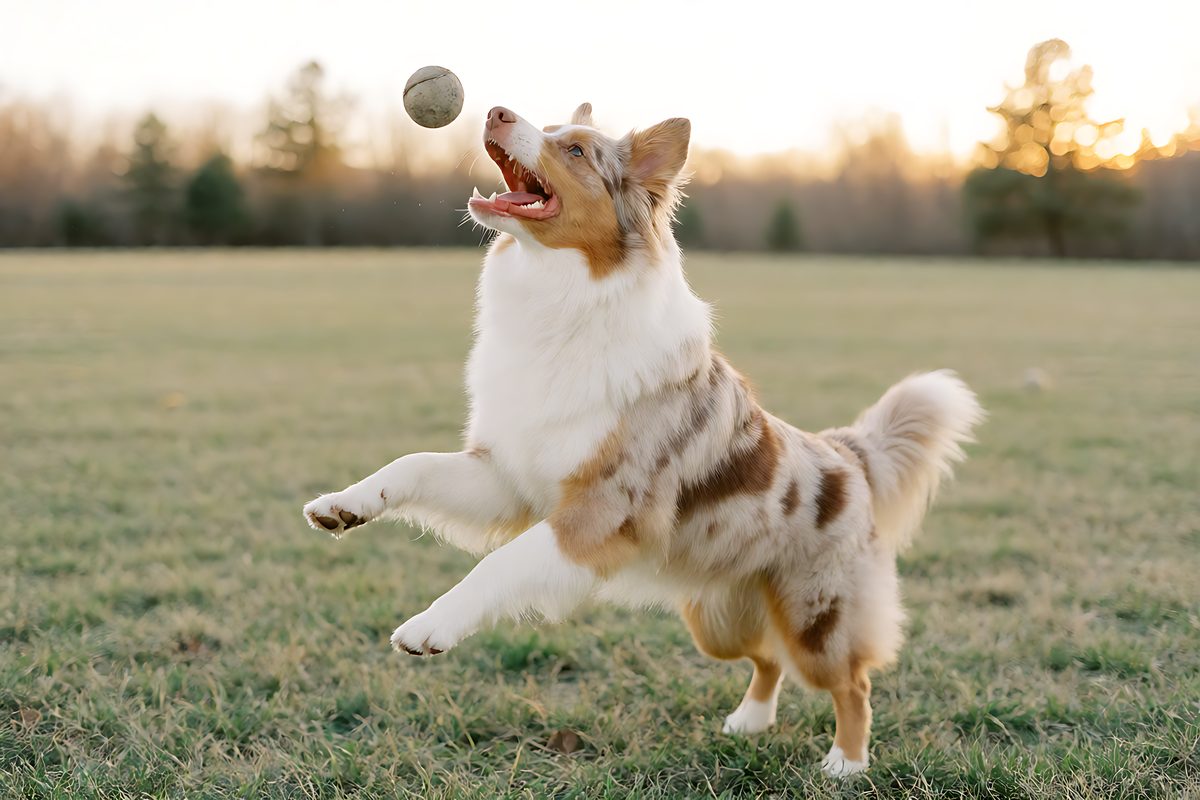
How Much Exercise Does a Dog Really Need Per Day?
The answer ranges from 30 minutes to over 2 hours. Here's how to match exercise to your dog's breed, age, and body condition.
Most healthy adult dogs need 30 minutes to 2 hours of exercise a day, split into a couple of walks plus play or sniffing time. High-energy breeds (herding, sporting, working) sit at the top of that range; low-energy breeds and seniors may need much less. Match intensity to your dog's breed, age, and body condition.
Despite the 'my dog is always tired' joke, there is a big range in what different dogs actually need. A two-hour hike a working breed would love can be too much for a senior toy breed — and a walk around the block can leave a young border collie under-stimulated and restless at home. The right amount depends on who your dog is.
A rough guide by breed type and age
| Dog type | Daily exercise | Notes |
|---|---|---|
| Low-energy / small breed | 30–45 minutes | A couple of walks and indoor play; they tire quickly. |
| Moderate (most family breeds) | 1 hour | A walk plus sniff time or a short game keeps them settled. |
| High-energy (herding, sporting, working) | 1.5–2 hours | Needs a walk AND off-lead play or a job; a bored high-energy dog is a destructive one. |
| Puppies | 5 min per month of age, twice a day | Short, frequent sessions protect growing joints. |
| Senior dogs | Varies, often less | Shorter, softer, more frequent; let them set the pace. |
How to tell if it's enough
- Settles at home rather than pacing, whining, or searching for something to do.
- Maintains a healthy body condition — you can feel ribs under a thin layer of fat.
- Sleeps well, has a good appetite, and is bright and responsive between walks.
- Does laundry or holds objects you'd like to redirect instead of chewing the furniture.
A sample day for a moderate-energy dog
- Morning: a 20–30 minute walk with time to sniff.
- Midday: a short play or training session of five to ten minutes.
- Evening: a second walk, then a puzzle feeder or chew to wind down.
Signs to slow down
Heavy panting that does not settle, lagging behind, limping or reluctance to walk are signs to stop and rest, and to check with your vet if they persist. This is general guidance, not veterinary advice.
Catch them at their calmest
A dog who has had the right amount of exercise settles beautifully, which makes it the best time for a portrait photo: natural light, at their eye level, face in focus. Preview it for free at petmona.app/generate.
More isn't always better
It's tempting to assume the answer is 'as much as possible', but over-exercising — especially running on hard ground, or long forced exercise for an unfit or senior dog — can strain joints and cause injury. Mental exercise matters just as much as physical: a training session or a puzzle feeder can tire a dog out as effectively as another walk. Aim for daily movement plus daily thinking, not just distance.
PetMona turns a clear pet photo into wall-ready art — ship an 8×10″ print or unlock HD to gift yourself. Free preview, no subscription.
Frequently asked questions
How much exercise does a puppy need?
A useful rule of thumb is about five minutes of structured on-lead exercise per month of age, twice a day — so a 4-month-old gets around 20 minutes, twice daily. Short, frequent sessions protect developing joints, and off-lead play and sniffing count too. Check with your vet or breeder for large or fast-growing breeds.
Is a walk around the block enough for my dog?
For a small, low-energy breed, often yes. For a medium or high-energy dog, probably not — the goal is to let them move, sniff, and work their brain, not just cover a few hundred metres. Add a sniff-heavy route, a game, or a training session if your dog still bounces after a short walk.
Can I over-exercise my dog?
Yes, particularly young, unfit, brachycephalic (flat-faced), or senior dogs. Long runs on hard surfaces, repeated jumping, and very long forced walks can cause joint strain and heat issues. Watch for heavy panting that won't settle, lagging behind, or limping — and add exercise gradually rather than dropping the dog into a big day.
What about mental exercise?
Mental work is a huge part of 'a tired dog'. Training, puzzle feeders, snuffle mats, and letting your dog sniff on a walk all burn real energy. Many owners find that adding ten minutes of brain work does more to settle an over-excited dog than adding another kilometre.
Is a daily walk enough exercise for a high-energy breed?
Often not by itself. A border collie, retriever, or husky usually needs a walk plus real play or a job — off-lead running, fetch, sniffing, a training session, or a canine sport. A long walk that's just walking often leaves a high-energy dog still wired at home. Add something that makes them think and sprint.