The Complete Guide to Pet Portrait Styles: From Classical to Modern
From royal oil to modern pop art, this guide breaks down every pet portrait style, including mood, coat color fit, and room placement. Learn a simple selection method and preview your pet in multiple styles before you buy.
Choosing a pet portrait style is about matching your pet's personality, your home decor, and the mood you want to create. From royal oil paintings to bold pop art, each style brings out a different side of your companion. Preview your favorite looks before you commit, using a pet photo you already love.
Find the Style That Feels Like Your Pet
Every pet has a presence. Some are regal and calm; others are goofy, expressive, or impossibly soft. A pet portrait can capture that presence, but the style you choose changes the story. The same reference photo can become a Renaissance oil painting, a minimalist line drawing, or a saturated pop-art print. This guide walks the full portrait spectrum and gives you a simple method for choosing a style that flatters your pet and fits your home.
Classical and Royal Pet Portraits
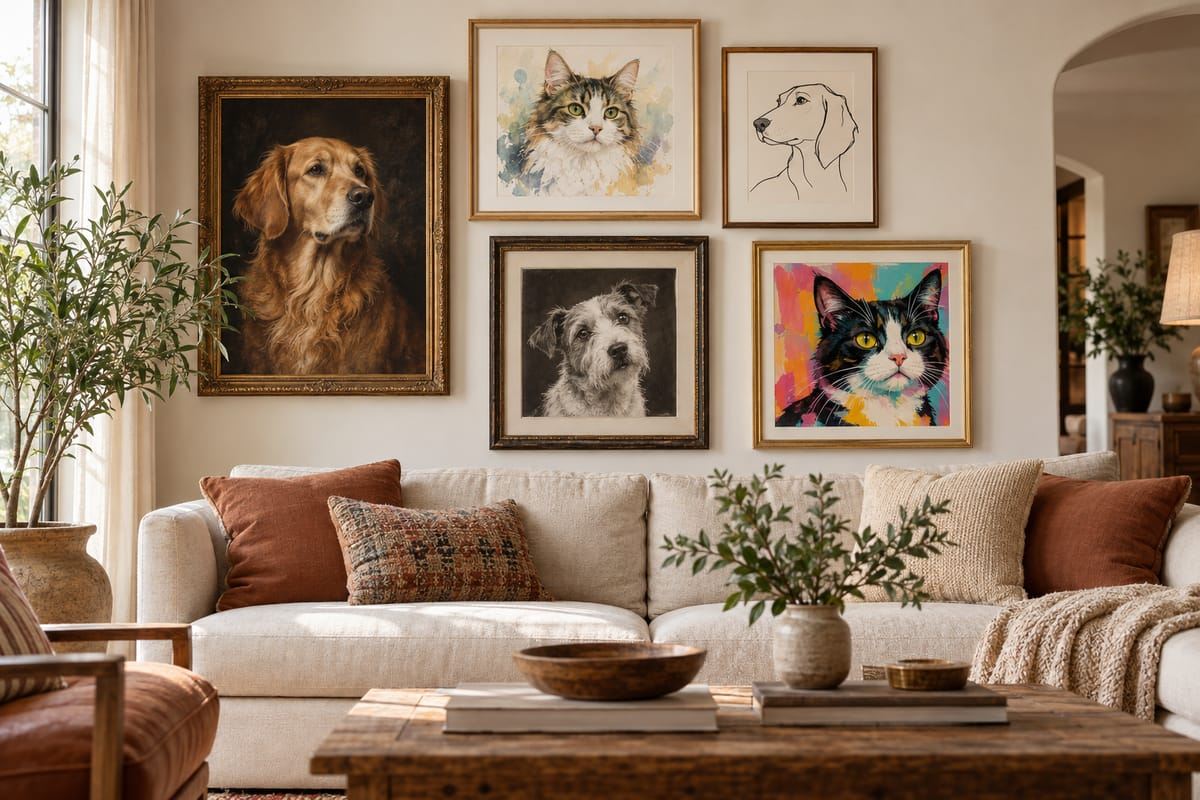
Renaissance/royal oil. This style borrows from old-master paintings: dark backgrounds, warm golden light, regal drapery, and a dignified pose. It flatters pets with dark or rich coats—black, chocolate, deep amber—because the dramatic lighting adds depth. It suits pets with a calm, aloof, or majestic personality, and it feels at home in a traditional living room, study, or entryway with wood furniture and warm neutrals.
Formal classical. Think of a restrained, elegant studio portrait with soft directional light and a clean, muted background. It is less theatrical than royal oil but still polished and timeless. This style works best for calm, poised pets with symmetrical markings, and it suits owners who prefer quiet sophistication. It belongs above a fireplace, in a library, or in any room with classic architectural details.
Watercolor. Loose washes of color and soft edges give watercolor portraits a delicate, airy feel. It is especially flattering for white, cream, or pale coats, and it can gently capture the irregular patches of a calico or tortoiseshell cat. Watercolor suits gentle, sweet personalities and small-format prints in bedrooms, nurseries, or bright bathrooms.
Pastel and pencil sketch. A sketch-style portrait feels intimate and hand-drawn, with visible strokes and soft shading. Pastel works beautifully on pets with long or fluffy fur, while a graphite pencil sketch brings out the texture of short, wiry coats. This is a good choice for a pet with a thoughtful or curious expression, and it looks natural in a creative workspace or a gallery wall with black-and-white photography.
Storybook and Vintage Styles
Storybook illustration. This style looks like a page from a children's book: slightly rounded lines, warm colors, and a gentle sense of wonder. It flatters any coat color, but it is exceptional for pets with big eyes or expressive faces. It suits playful, affectionate personalities and fits beautifully in a family room, playroom, or hallway where whimsy is welcome.
Vintage film and black-and-white. A vintage film look uses film grain, gentle halation, and muted tones to create nostalgia. A black-and-white portrait removes the distraction of color and highlights shape, contour, and expression. Both styles suit senior pets, rescue animals, and pets with distinctive silhouettes. They work especially well in industrial, mid-century, or minimalist interiors, and they pair perfectly with leather, brass, and exposed brick.
Nordic minimal. Clean lines, negative space, and a restrained palette define this style. It is a smart match for pets with simple markings, like all-black, all-white, or tuxedo coats, because minimalism makes those shapes graphic. It suits confident, composed pets and fits modern apartments, Scandinavian-inspired rooms, and offices where clutter is kept at bay. The portrait becomes a quiet design element rather than a focal point.
Modern, Bold, and Playful Styles
Pop art. Bright, saturated colors, strong outlines, and halftone dots turn your pet into a bold piece of contemporary art. Pop art flatters pets with unusual or multicolored coats—brindle, tortoiseshell, merle, or patched—by making the contrast pop. It is ideal for energetic, extroverted pets and for game rooms, home bars, or any space that already has loud accent colors.
Anime/cartoon. This style exaggerates features in a joyful way: oversized eyes, tiny nose, and expressive pose. It works for any pet, but it is especially fun with breeds that have naturally cartoonish features, like pugs, French bulldogs, and Scottish folds. It suits silly, affectionate personalities and belongs in a teen's bedroom, a pop-culture den, or a casual living space that celebrates personality.
Art Deco. Geometric shapes, sharp angles, gold accents, and elegant symmetry define Art Deco pet portraits. This style flatters sleek or short-haired pets and animals with defined profiles, such as greyhounds, Siamese cats, or Dobermans. It conveys a sense of glamour and confidence, making it a striking addition to a dining room, dressing room, or any interior with brass, velvet, and marble.
Modern. Contemporary modern portraiture can mean abstract shapes, bold color blocking, or simplified forms. It favors pets with strong features and works best when you want a piece that feels current and conversation-starting. It suits open-plan lofts, galleries, and offices, and it pairs well with furniture that has clean lines and sculptural shapes.
How to Choose the Right Pet Portrait Style
If you love several styles, use three simple filters. First, match your decor. Walk through the room where the portrait will live and note the dominant colors, materials, and mood. A royal oil painting may feel out of place in a bright, modern kitchen, while a pop-art piece may overwhelm a minimalist bedroom. Second, think about fur color contrast. Dark coats disappear into dark backgrounds, and white coats can feel too stark on white walls. Choose a style and background that make your pet's unique markings stand out. Third, define the mood you want to feel every day. Do you want warm nostalgia, elegant calm, or joyful energy? Let that feeling guide you.
The easiest way to decide is to see your own pet in a few styles before you spend anything. Start at petmona.app/generate, upload a favorite photo, and generate the styles you want to compare one at a time. Using the same reference photo makes it easier to judge how your pet's coat and personality translate from oil to watercolor to pop art. After you settle on a favorite digital portrait, you can order the 12×16-inch archival matte print in its ready-to-hang black oak frame at petmona.app/framed-print.
A Portrait Style Is a Love Letter
There is no single best style, only the style that feels most like your pet and your home. A portrait is not just decoration; it is a way of seeing your companion. Whether you choose the gravitas of oil paint, the softness of watercolor, or the boldness of pop art, the right frame will make your pet's personality the center of the room.
PetMona turns a clear pet photo into wall-ready art — ship an 8×10″ print or unlock HD to gift yourself. Free preview, no subscription.
Frequently asked questions
What pet portrait style is most timeless?
Classical oil and Renaissance-style portraits remain timeless because they mimic traditional fine-art techniques that have been displayed in homes for centuries.
Which pet portrait style is best for unusual or multicolored coats?
Pop art and modern illustration are great choices for unusual or multicolored coats because strong outlines and saturated colors make markings pop. Watercolor also works well if you prefer a softer look that still honors patches and gradients.
Can I see what a portrait will look like before buying?
Yes, PetMona lets you preview AI portraits with your own photo before you pay, so you can compare styles on your actual pet and choose the one that feels right.